


Introduction to Environmental Engineering and Science, 3rd Ed
[product_category_loop_addtocart show=”all” text_align=”center” el_class=”hy-cart-center” mobile_text_align=”center”]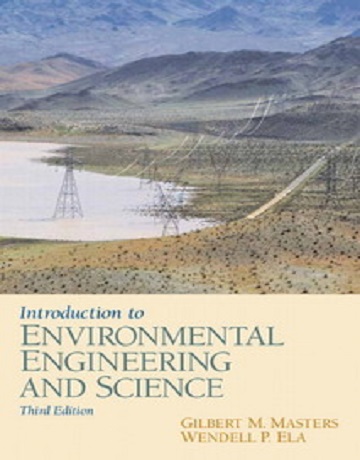
Introduction to Environmental Engineering and Science, 3rd Ed

Book Overview
The Introduction to Environmental Engineering and Science, 3rd Ed presents a balanced treatment of environmental engineering by combining engineering concepts with the importance of environmental ethics. This third edition highlights sustainable development and emphasizes the need for engineers to become even more environmentally responsible during this time of increasing awareness of environmental concerns. The authors challenge students with problems that require not only a technical solution but a thorough consideration of its ethical ramifications. The text also provides comprehensive exposure to all types of environmental problems, including ecosystem dynamics, wastewater treatment, and air pollution control.
Key aspects:
- Balanced Coverage: The book treats all major categories of pollution (water, air, solid waste, and hazardous waste) while integrating contemporary and emerging environmental issues such as climate change, ozone depletion, and risk assessment.
- Fundamental Principles: It begins with core concepts in mass and energy transfer, then moves into environmental chemistry, reaction kinetics, and transport phenomena.
- Quantitative Tools: Students learn how to perform engineering calculations, including material balances, separation processes, and reactor design—skills essential for understanding treatment systems.
- Risk Assessment and Sustainability: There’s a strong emphasis on risk-analysis methodologies, environmental health risks, and sustainable development practices.
- Water Quality Engineering: Detailed discussion of water pollution, including water supply, treatment processes, and pollution control strategies.
- Air Pollution & Global Change: The book covers air pollution control methods and explores global atmospheric change, tying in how engineering solutions intersect with worldwide environmental trends.
- Solid Waste and Resource Recovery: There’s also coverage of solid waste management, recycling, and resource recovery strategies—core to modern environmental engineering.
- Ethics and Regulation: Ethical issues (e.g., environmental justice, green engineering) and legal/regulatory frameworks are woven throughout, helping students understand the societal context of engineering decisions.
- Pedagogical Support: End-of-chapter review problems, case studies, and real-world examples help students apply theoretical ideas to practical environmental problems.
Highlights:
- Accessible Introduction: Ideal for undergraduates with minimal prior background.
- Real-World Applications: Connects theory to practical environmental problems.
- Comprehensive Approach: Covers technical, social, and ethical dimensions of environmental engineering.
- Structured Learning: Organized progression from fundamentals to advanced topics.
- Sustainability Focus: Emphasizes sustainable practices and responsible engineering solutions.
Key Features & Benefits

The Introduction to Environmental Engineering, 3rd Ed offers comprehensive coverage of environmental engineering and science by addressing all major pollution categories—water, air, solid waste, and hazardous waste—while integrating contemporary environmental issues such as climate change, ozone depletion, and risk assessment. It balances fundamental engineering principles, including mass and energy balances, reaction kinetics, and transport phenomena, with practical applications and real-world challenges. Ethical considerations, regulatory frameworks, and sustainability practices are woven throughout, providing students with a holistic understanding of the environmental field. This comprehensive approach ensures that learners gain both technical proficiency and awareness of societal impacts, making the content relevant for academic and professional contexts.
- Addresses all major pollution categories
- Integrates contemporary environmental issues
- Covers fundamental engineering principles
- Emphasizes ethical and regulatory considerations
- Focuses on sustainability and practical applications
- Balances theory with applied examples, case studies, and exercises
The Introduction to Environmental Engineering, 3rd Ed emphasizes practical application by linking theoretical concepts in environmental engineering to real-world situations. Students are guided through engineering calculations, problem-solving techniques, and design strategies relevant to water treatment, air pollution control, solid waste management, and hazardous waste remediation. End-of-chapter problems, case studies, and illustrative examples allow learners to apply principles to realistic scenarios, fostering critical thinking and hands-on understanding. This approach ensures that students not only grasp the scientific and engineering foundations but also learn how to implement solutions that address actual environmental challenges.
- Applies theoretical concepts to real-world environmental problems.
- Provides end-of-chapter problems for skill reinforcement.
- Uses case studies to demonstrate real-world applications.
- Illustrates concepts with practical, real-life examples.
- Encourages critical thinking and solution-oriented learning.
The Introduction to Environmental Engineering, 3rd Ed serves as a valuable resource for licensing exam preparation by providing foundational knowledge, engineering principles, and practical problem-solving skills aligned with the content areas tested in environmental and civil engineering licensure exams. Through worked examples, quantitative exercises, and review problems at the end of each chapter, students can practice and reinforce the key concepts needed for professional exams. Case studies and applied scenarios also help learners understand how theoretical knowledge is used in real-world engineering contexts, enhancing readiness for exams such as the Fundamentals of Engineering (FE) and Professional Engineering (PE) tests.
- Covers foundational knowledge required for licensing exams.
- Reinforces engineering principles and practical problem-solving.
- Includes worked examples to demonstrate step-by-step solutions.
- Provides end-of-chapter review problems for practice.
- Features case studies to connect theory with real-world scenarios.
The Introduction to Environmental Engineering, 3rd Ed incorporates a variety of visual and organizational tools to enhance student learning and comprehension. Diagrams, charts, and tables clearly illustrate complex environmental processes such as mass transfer, reaction kinetics, and pollution control mechanisms. Conceptual figures and flow diagrams help students visualize system interactions, while boxed examples, key term highlights, and summary tables organize critical information for easy reference. These tools support structured learning, making it easier for students to follow theoretical explanations, apply quantitative methods, and connect concepts to real-world environmental engineering challenges.
- Uses diagrams and charts to explain complex processes.
- Includes tables summarizing key information and data.
- Flow diagrams illustrate system interactions and processes.
- Boxed examples demonstrate step-by-step problem solving.
- Key term highlights emphasize important concepts.
- Summary tables consolidate essential points for review.
- Enhances comprehension and retention through structured presentation.
Book Details
- Publisher: Pearson
- Edition/Release Date: 3rd Edition, June 8, 2007
- ISBN: 9780131481930
- Pages: 720
- Dimensions: 9.56 × 7.29 × 1.17 inches
- Format: Paperback / Softbound
- Target Audience: Professionals
Pricing & Purchase Information
• Price: $277.99
• Shipping: Free shipping on orders over $250.
• Formats Available: Physical Book
Related Products
-

West Virginia General Engineering Contractor Online Exam Prep Complete Package
$753.96Add to cartOur complete package includes all references used to study for the exam, pre-printed tabs for only those references allowed to be brought into the exam center, and 365 days access to our online exam prep course. The highlighting guides and quizzes are designed to familiarize students with testing materials. We do not provide students with exact test questions, as the state does not release this information. @HomePrep is a National Leader in online education. With over 100,000 satisfied students and a course catalog of over 1,000 classes, we are here to help you – Invest in Yourself.
-

The Texas Environmental Air A&B Online Exam Prep Complete Package
$1,486.90Add to cartThe Texas Environmental Air A&B Exam Complete Package includes all references needed to study for the exam, pre-printed tabs for only those references allowed to be taken into the exam and 365 days access to our online exam prep course. The highlighting guides and quizzes are designed to familiarize students with testing materials. We do not provide students with exact test questions, as the state does not release this information.
-

California General Engineering-A Includes both a physical Home Study Manual and Online Exam Prep
$269.99Add to cartStudent’s enrolled in the California General Engineering Online Exam Prep will receive the following items: Home Study Manual, Audio/Video Streaming Lectures, and Practice Exams. Please click product details for additional info.


Student Reviews
There are no contributions yet.