
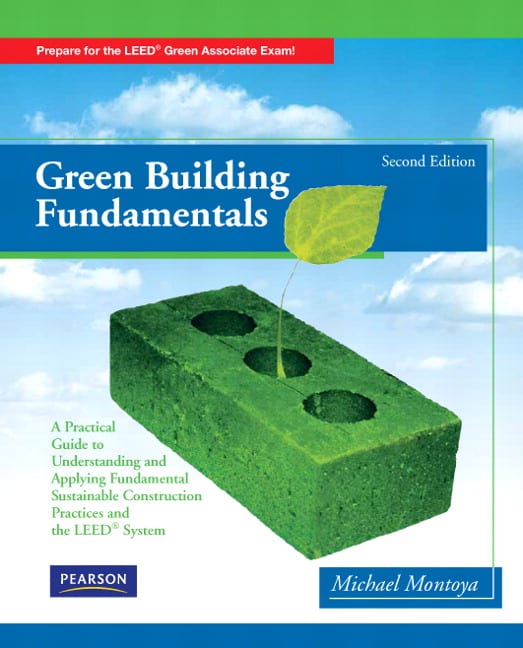
Green Building Fundamentals 2nd Edition

Green Building Fundamentals 2nd Edition

Price: $108.99
Green Building Fundamentals, 2nd Edition by Mike Montoya provides an introductory yet practical overview of sustainable construction and design principles, focusing on how buildings can reduce environmental impact while improving efficiency and occupant well-being. The book explains core concepts such as sustainability in the construction industry, the “triple bottom line”...

Shopping with us is fast, easy, and affordable

Free Shipping Available on $250+ Orders
Buy Confidently with our Hassle-Free Returns
Sales Suport Available 1-800-952-0910
Book Overview

Green Building Fundamentals, 2nd Edition by Mike Montoya is a detailed instructional text that explains how the construction industry can transition toward more sustainable and environmentally responsible practices. The book presents a comprehensive framework for understanding green building by connecting theory with practical application, beginning with the role of sustainability in modern construction and the importance of balancing environmental, economic, and social goals (often referred to as the “triple bottom line”). It emphasizes that buildings significantly impact natural resources and energy consumption, and therefore must be designed and constructed to reduce environmental harm while improving efficiency and occupant health. The text systematically explores the entire lifecycle of a building—from site selection and design to construction, operation, and performance evaluation—demonstrating how each phase can incorporate sustainable strategies. It also explains cost considerations, showing that while green buildings may involve higher upfront costs, they often lead to long-term savings and improved productivity. In addition, the book provides practical examples, case-based explanations, and technical guidance on improving environmental performance using current technologies and methods. A major component of the book is its detailed coverage of the U.S. Green Building Council’s LEED rating system, offering step-by-step insights into certification processes and preparing readers for the LEED Green Associate exam. Overall, the text functions as both a foundational learning resource and a professional guide for applying sustainable building principles in real-world projects.

Key Aspects:

  • Sustainability in construction: Explains environmental, economic, and social impacts of buildings and introduces the triple bottom line concept.
  • Sustainable design principles: Covers strategies for designing high-efficiency buildings, including reducing resource use and improving performance.
  • Site development and land use: Discusses evaluating sites, minimizing ecological disruption, and managing stormwater and environmental impacts.
  • Water efficiency: Describes methods such as water-efficient landscaping, wastewater recycling, and rainwater reuse systems.
  • Energy efficiency and systems: Explores building energy performance, HVAC systems, and passive design strategies.
  • Renewable energy integration: Details technologies like solar, wind, geothermal, and on-site power generation systems.
  • Materials and resource management: Focuses on sustainable material selection, recycling, and reducing construction waste.
  • Indoor environmental quality: Highlights ventilation, air quality, and occupant comfort for healthier indoor spaces.
  • Cost and lifecycle analysis: Examines initial costs versus long-term savings and productivity benefits of green buildings.
  • LEED certification guidance: Provides in-depth coverage of LEED standards, checklists, and exam preparation resources.

This combination of conceptual explanation and practical application makes the book especially useful for students, construction professionals, and anyone preparing for green building certification or working in sustainable design.

Key Features & Benefits

Product Checkbox
Comprehensive Coverage:

Green Building Fundamentals 2nd Edition provides a comprehensive and structured exploration of sustainable construction practices, combining foundational theory with practical application across the full lifecycle of buildings. The book explains how the built environment significantly affects energy use, water resources, and ecological systems, and it presents strategies to reduce these impacts while improving building performance and occupant well-being. It begins with core sustainability concepts—particularly the balance between environmental responsibility, economic feasibility, and social equity—and then expands into detailed technical guidance on designing, constructing, and operating high-performance buildings. The text emphasizes integrated design, where architects, engineers, and contractors collaborate early in the process to achieve optimal results. It also addresses modern technologies, regulatory frameworks, and certification systems, especially those developed by the U.S. Green Building Council, preparing readers to understand and apply industry standards. Through real-world examples, diagrams, and study tools, the book equips readers with both conceptual understanding and actionable knowledge for implementing green building strategies in diverse projects.

  • Sustainability foundations: Introduces key concepts such as environmental impact reduction, resource conservation, and the “triple bottom line” approach to decision-making.
  • Integrated design process: Emphasizes collaboration among stakeholders to improve efficiency, reduce costs, and enhance building performance from the earliest planning stages.
  • Site selection and land development: Covers sustainable site planning, ecosystem preservation, urban density considerations, and stormwater management techniques.
  • Water efficiency strategies: Details systems for reducing water use, including low-flow fixtures, rainwater harvesting, and wastewater reuse.
  • Energy performance and efficiency: Explores building envelope design, insulation, lighting systems, HVAC optimization, and energy modeling techniques.
  • Renewable energy systems: Examines solar, wind, and geothermal technologies, along with methods for integrating on-site energy generation into buildings.
  • Materials and resource management: Discusses life-cycle assessment, sustainable material sourcing, recycling, and construction waste reduction practices.
  • Indoor environmental quality: Focuses on ventilation, lighting, thermal comfort, and low-emission materials to improve occupant health and productivity.
  • Economic considerations: Analyzes cost-benefit relationships, life-cycle costing, and long-term financial advantages of green buildings.
  • LEED certification and standards: Provides in-depth guidance on the LEED rating system, including credits, categories, and strategies for achieving certification.
  • Operations and maintenance: Addresses building performance monitoring, commissioning, and ongoing sustainability practices after construction is complete.

Overall, the book delivers a well-rounded and detailed framework that helps readers understand not just what green building is, but how to apply its principles effectively in real-world construction and design projects.

Product Checkbox
Practical Application:

Green Building Fundamentals 2nd Edition emphasizes practical application by translating sustainability concepts into real-world actions that can be implemented throughout the building process—from initial planning to long-term operation. Rather than focusing only on theory, the book shows how professionals can make informed decisions that reduce environmental impact while maintaining cost-effectiveness and performance. It highlights the importance of integrating green strategies early in design, selecting efficient systems and materials, and using measurable standards such as those from the U.S. Green Building Council to guide implementation. The practical approach also includes evaluating trade-offs, managing budgets, and ensuring that sustainability goals are achievable within real project constraints. By using case examples, performance metrics, and step-by-step strategies, the book helps readers apply green building principles directly to construction projects, making sustainability both actionable and measurable.

Practical Applications Highlighted in the Book

  • Integrated project planning: Collaborate with architects, engineers, and contractors early to align sustainability goals and avoid costly redesigns.
  • Site optimization: Choose locations and layouts that minimize environmental disruption and support natural drainage and ecosystem preservation.
  • Water-saving implementation: Install low-flow fixtures, rainwater harvesting systems, and efficient irrigation to reduce water consumption.
  • Energy-efficient design: Apply insulation, high-performance windows, and efficient HVAC systems to lower energy demand.
  • Renewable energy use: Incorporate solar panels or other on-site energy systems to offset traditional energy consumption.
  • Material selection in practice: Use recycled, locally sourced, and low-impact materials to reduce environmental footprint and transportation costs.
  • Construction waste management: Develop plans to recycle or reuse materials and minimize landfill waste during construction.
  • Indoor environmental improvements: Select low-emission materials and ensure proper ventilation to enhance occupant health and comfort.
  • Cost and lifecycle decision-making: Evaluate upfront costs versus long-term savings to justify sustainable investments.
  • Performance tracking and commissioning: Monitor building systems after completion to ensure they operate efficiently and meet design goals.

These applications demonstrate how green building principles move beyond theory into everyday decision-making, helping professionals create buildings that are sustainable, efficient, and economically viable.

Product Checkbox
Licensing Exam Preparation:

Green Building Fundamentals 2nd Edition is widely used as a study resource for individuals preparing for green building–related credentialing exams, especially the LEED Green Associate exam administered by the U.S. Green Building Council. The book supports exam preparation by breaking down complex sustainability concepts into clear, structured lessons and aligning its content with the knowledge domains tested on professional certification exams. It combines foundational theory with applied examples, helping readers not only memorize key concepts but also understand how they are used in real projects—an essential skill for passing licensing and credentialing exams in the green building field.

Licensing / Certification Exam Preparation Focus

  • Alignment with exam domains: Covers core LEED categories such as sustainable sites, water efficiency, energy and atmosphere, materials and resources, and indoor environmental quality.
  • Clear explanations of key concepts: Simplifies topics like the triple bottom line, lifecycle costing, and integrated design for easier understanding and recall.
  • LEED terminology and standards: Reinforces essential vocabulary and rating system requirements used in certification exams.
  • Practice questions and review sections: Includes end-of-chapter quizzes and review materials to test knowledge and reinforce learning.
  • Real-world application examples: Connects theoretical concepts to practical scenarios often reflected in exam questions.
  • Step-by-step certification insight: Explains how the LEED process works, including credits, documentation, and scoring.
  • Focus on energy and environmental strategies: Prepares learners to evaluate building performance and sustainability measures.
  • Test-taking readiness: Helps build familiarity with the format and types of questions encountered on exams like the LEED Green Associate.

Overall, the book functions as both a foundational textbook and a targeted exam-prep guide, giving readers the knowledge and confidence needed to pursue green building certifications and apply those principles in professional practice.

Product Checkbox
Visual & Organizational Tools:

Green Building Fundamentals 2nd Edition uses a range of visual and organizational tools to make complex sustainability concepts easier to understand, retain, and apply—especially for students and professionals preparing for certification through the U.S. Green Building Council. These tools are designed to break down technical material into manageable sections, reinforce key ideas, and support different learning styles. By combining visuals with structured content, the book helps readers quickly grasp relationships between systems (such as energy, water, and materials) and see how they function together in real-world building scenarios.

  • Diagrams and illustrations: Show building systems (HVAC, water flow, energy use) and how components interact within sustainable design.
  • Charts and tables: Summarize key data, comparisons, and performance metrics for quick reference and review.
  • Step-by-step process graphics: Outline procedures such as LEED certification steps, project workflows, and system implementation.
  • Chapter outlines and learning objectives: Clearly define what each section covers and what readers are expected to learn.
  • Key term highlights: Important vocabulary and concepts are emphasized for easier memorization and exam preparation.
  • Case studies and examples: Provide visualized real-world applications that connect theory to practice.
  • Review questions and summaries: Reinforce understanding at the end of chapters and help with self-assessment.
  • Callout boxes: Highlight important tips, definitions, and critical concepts within the text.
  • Consistent layout structure: Organizes content logically so readers can follow topics from basic concepts to advanced applications.

These features make the material more accessible and structured, helping readers efficiently study, review, and apply green building principles in both academic and professional contexts.

Publisher Information

Mike Montoya is an educator and industry professional specializing in sustainable construction and green building practices. He is known for his work in developing curriculum and training materials that prepare students and professionals for careers in environmentally responsible construction. With experience in both teaching and industry application, Montoya focuses on making complex sustainability concepts accessible and practical, particularly in relation to LEED certification standards developed by the U.S. Green Building Council. His book Green Building Fundamentals is widely used as a textbook and exam preparation resource, reflecting his emphasis on combining foundational knowledge with real-world application.

Book Details
  • Publisher: Pearson Education
  • Edition/Release Date: 2nd Edition, January 6, 2010
  • ISBN: 9780135111086
  • Pages: 650
  • Dimensions: 10x8x1 inches
  • Format: Softcover
  • Target Audience: Professionals
Pricing & Purchase Information

• Price: $108.99
• Shipping: Free shipping on orders over $250.
• Formats Available: Physical Book

Related Products

Ensure you and your team are up-to-date with the latest Green Building Fundamentals 2nd Edition and stay compliant with ease.

Click below to order your copy of Green Building Fundamentals 2nd Edition today!