
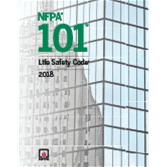
NFPA 101, Life Safety Code 2018

NFPA 101, Life Safety Code 2018

Book Overview
NFPA 101, also known as the Life Safety Code, bridges theoretical fire safety principles with practical applications in building design, emergency preparedness, and regulatory compliance. It provides a structured framework for ensuring occupant safety by integrating fire protection systems, emergency egress strategies, and risk assessment methodologies.
For example, NFPA 101 mandates specific exit route designs, emergency lighting, and fire alarm systems to facilitate safe evacuation during emergencies. It also incorporates performance-based design approaches, allowing engineers to model fire scenarios and assess potential hazards. This ensures that theoretical fire safety concepts—such as smoke movement, fire spread, and human behavior in emergencies—are translated into actionable safety measures.
Key Features & Benefits
Changes to the 2018 edition of NFPA 101, Life Safety Code, include:
- Expanded scope to cover hazardous materials emergencies, injuries from falls, and emergency communications
- New requirements for hazardous materials protection of other than fire-related hazards (Chapter 8)
- Added reference to NFPA 4 for integrated fire protection and life safety system testing, and new provisions for risk analyses for mass notification systems (Chapter 9)
- Animal housing facilities added as special structures (Chapter 11)
- Expanded requirements for carbon monoxide detection in new assembly occupancies and new residential board and care occupancies (Chapters 12 and 32)
- Added criteria for door locking to prevent unwanted entry in educational, daycare, and business occupancies (Chapters 14 to 17, 38, and 39)
- New mandatory sprinkler requirement for all but very small new educational occupancies (Chapter 14)
- Inclusion of provisions that permit health care and ambulatory health care smoke compartments up to 40,000 ft2 (3720 m2) in area (Chapters 18 and 19)
- Expanded requirements for bathtub and shower grab bars, which are then referenced by numerous occupancy chapters (Chapter 24)
- Added requirements for attic protection requirements that impact certain new hotels and dormitories and apartment buildings (Chapters 28 and 30)
- New reference to NFPA 99 for medical gases in business occupancies (Chapters 38 and 39)
- New Annex C offering guidance on several NFPA hazardous materials standards to assist users with the new hazardous materials protection requirements.
Additionally, NFPA 101 training programs help professionals apply these principles effectively, equipping them with the knowledge to navigate complex safety regulations and implement preventive measures. This real-world application enhances workplace safety and ensures compliance with industry standards.
The NFPA 101 is approved by the state of Florida for the Florida Residential Electrical Contractors Exam and the Florida Unlimited Electrical Contractor Exam.
The NFPA 101 Life Safety Code Handbook includes a variety of illustrations, tables, and forms to help clarify its requirements. Some key features include:
- Full-color illustrations and photos to visually explain code provisions.
- Tables that compare requirements for new and existing occupancies.
- Forms and checklists to assist with compliance and application.
- Matrix overviews highlighting substantive changes between editions.
Book Details
- Publisher: NFPA
- Edition/Release Date: October 27, 2017
- ISBN: 978-1455916832
- Pages: 568
- Dimensions: 8.5 x 1.25 x 11 inches.
- Format: Paperback
- Target Audience: Professionals
Pricing & Purchase Information
• Price: $217.99
• Shipping: Free shipping on orders over $250.
• Formats Available: Physical Book
Related Products


Student Reviews
There are no contributions yet.