
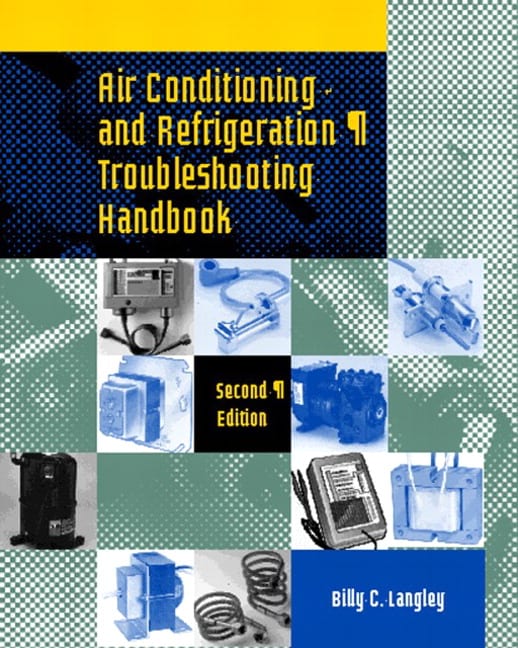
Air Conditioning and Refrigeration Troubleshooting Handbook 2nd Edition

Air Conditioning and Refrigeration Troubleshooting Handbook 2nd Edition

Book Overview
New to this edition:
- New refrigerants are illustrated
- EPA-required refrigerant handling procedures are used in exercises and procedures
- Electronic control troubleshooting procedures
Using at-a-glance charts, cross-referenced to specific sections of the text, it encompasses control operation, adjustment, troubleshooting, installation, and use, and provides start-up procedures for different types of units, representative wiring diagrams for some types of equipment, safety procedures, and useful engineering data.
Key Features & Benefits
-
System Fundamentals: Refrigerant cycle, heat transfer, and component interactions
-
Troubleshooting Methodology: Step-by-step fault isolation charts and logic
-
Component-Level Issues: Compressors, condensers, evaporators, expansion devices, motors, fans, and controls
-
Electrical & Controls: Wiring, relays, capacitors, switches, and diagnostics
-
Performance Problems: Poor cooling, high energy use, short cycling, airflow issues
-
Diagnostics Tools: Gauges, multimeters, leak detectors, infrared/electronic tools
-
Refrigerant & Charge Issues: Over/undercharge, leaks, pressure effects, safe handling
-
Maintenance & Preventive Practices: Cleaning, lubrication, inspections, seasonal checks
-
Visual Aids: Diagrams, flowcharts, and real-world examples for quick problem-solving
System Diagnosis
-
Quickly identify issues in air conditioning or refrigeration systems
-
Use symptom → cause → solution logic to troubleshoot effectively
2. Component Repair
-
Diagnose and fix compressors, evaporators, condensers, expansion devices, motors, and fans
-
Ensure components are installed, charged, and operating properly
3. Electrical Troubleshooting
-
Use wiring diagrams, multimeters, and controls charts to locate electrical faults
-
Safely test relays, capacitors, switches, and thermostats
4. Performance Optimization
-
Solve problems like poor cooling, short cycling, frost/freezing, and airflow issues
-
Optimize system efficiency and reduce energy waste
5. Refrigerant Handling & Charging
-
Detect leaks, correct under/overcharging, and safely recover refrigerant
-
Ensure pressure and temperature levels are within design limits
6. Maintenance & Preventive Measures
-
Establish routine inspections, cleaning, and lubrication practices
-
Reduce downtime and extend system life
7. Field Reference
-
Flowcharts, diagrams, and real-world examples make it easy to use on-site
-
Serves as a practical troubleshooting manual rather than a theoretical textbook
Understanding System Fundamentals
-
Reinforces knowledge of the refrigeration cycle, heat transfer, and system components
-
Many exams test these basic principles in multiple-choice or problem-solving questions
2. Problem-Solving & Logical Thinking
-
Teaches the step-by-step troubleshooting process (symptom → probable cause → solution)
-
Helps answer scenario-based exam questions about diagnosing system issues
3. Component Knowledge
-
Covers compressors, evaporators, condensers, expansion devices, motors, and controls
-
Exams often include questions on function, failure modes, and repair methods
4. Electrical & Controls
-
Wiring diagrams, relays, switches, and safety devices are frequently tested
-
Provides the reasoning behind electrical troubleshooting questions
5. Refrigerant & Charge Principles
-
Includes correct charging, leak detection, and pressure/temperature relationships
-
Licensing exams test knowledge of safe refrigerant handling and system pressures
6. Performance Issues
-
Prepares you for questions on poor cooling, airflow problems, or efficiency issues
-
Demonstrates practical understanding of diagnosing common HVAC/R problems
7. Practical Application
-
Real-world examples in the handbook help you visualize scenarios similar to exam questions
-
Bridges the gap between theoretical knowledge and applied problem-solving
Flowcharts & Step-by-Step Guides
-
Logical troubleshooting sequences: symptom → cause → corrective action
-
Allows quick diagnosis without reading full text
2. Diagrams & Illustrations
-
Detailed schematics of:
-
Refrigeration cycles
-
Component layouts (compressors, evaporators, condensers)
-
Electrical wiring and controls
-
-
Helps visualize system operation and component relationships
3. Tables & Charts
-
Pressure-temperature tables for refrigerants
-
Common failure symptoms vs. causes
-
Electrical specifications and component ratings
-
Enables fast lookup of critical data
4. Checklists
-
Maintenance routines, inspection steps, and preventive measures
-
Field-ready format for on-site use
5. Sectioned & Numbered Layout
-
Chapters organized by system types, components, or troubleshooting topics
-
Numbered sections and headings allow quick navigation
6. Case Examples
-
Real-world problem scenarios with illustrated solutions
-
Provides context for applying rules and understanding practical outcomes
Book Details
- Publisher: Pearson.
- Edition/Release Date: Second Edition Copyright 2003
- ISBN: 9780135787410
- Pages: 528
- Dimensions: 9.38 x 7.76 x .27 in
- Weight: 2.3 lbs
- Format: Hardcover
Target Audience: HVAC Students and Professionals.
Pricing & Purchase Information
• Price: $274.99
• Shipping: Free shipping on orders over $250.
• Formats Available: Physical Book
Related Products