
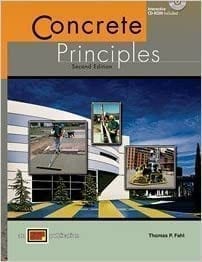
Concrete Principles

Concrete Principles

Book Overview
The Concrete Principles is a comprehensive textbook that explores the full gamut of materials, techniques, and practices used in modern concrete construction. Authored by Thomas P. Fahl and published in 2009 by American Technical Publishers, it corresponds closely with the curriculum of the Operative Plasterers’ & Cement Masons’ International Association of the U.S. & Canada. The book begins with foundational discussions — history, evolution, and characteristics of concrete — then progresses into more technical and hands‑on topics such as tools, equipment safety, concrete exposure safety, soil conditions, flatwork (slabs, floors, etc.), consolidation, finishing techniques, formwork, reinforcement, quality testing, repair practices, and estimating. It also contains updated material on newer technologies and special concrete types: pervious concrete; precast and tilt‑up methods; slip and flying forms; insulated concrete forms (ICFs); grouting and epoxy injection; self‑consolidating concrete; reactive powder concrete; and sustainable design including LEED certification
Key aspects:
Comprehensive Coverage
Covers the entire scope of concrete work—from basic materials and tools to advanced techniques like precast and tilt-up construction.
Educational Alignment
Developed in coordination with the Operative Plasterers’ & Cement Masons’ International Association, making it ideal for apprenticeship and training programs.
Safety & Health Emphasis
Includes detailed guidance on safety around tools, equipment, chemical exposure, and formwork hazards, aligning with OSHA standards.
Modern Concrete Technologies
Introduces advanced materials and methods such as:
- Self-consolidating concrete (SCC)
- Pervious concrete
- Reactive powder concrete
- Grouting and epoxy injection
- Insulated concrete forms (ICFs)
Sustainable Construction
Covers green practices including LEED certification, low-carbon mixes, and energy-efficient concrete systems.
Structural Elements
Discusses placement and finishing of slabs, walls, columns, and specialty forms (e.g., flying forms, slipforms).
Testing & Quality Control
Explains slump testing, curing methods, strength testing, and how to identify/repair defects like cracks or honeycombing.
Estimating & Planning
Teaches how to calculate quantities of concrete, reinforcement, and labor for job planning and cost estimating.
Highlights:
- Industry-Backed Textbook
Developed in partnership with the Operative Plasterers’ & Cement Masons’ International Association, ensuring relevance to real-world trade skills. - Strong Foundation in Concrete Basics
Explains the science of concrete — mix design, hydration, curing, and physical properties — in clear, practical terms. - Covers Modern Methods & Materials
Includes updates on pervious concrete, self-consolidating concrete (SCC), reactive powder concrete, ICFs, tilt-up panels, and more. - Emphasis on Safety
Includes complete sections on tool safety, chemical exposure, formwork hazards, and OSHA compliance. - Hands-On Focus
Provides step-by-step instructions for placing, finishing, repairing, and testing concrete in various jobsite scenarios. - Sustainability Awareness
Introduces concepts of green concrete, LEED certification, and energy-efficient construction.
Key Features & Benefits
The Concrete Principles offers an all-encompassing exploration of concrete as a construction material and practice. Designed to support both classroom instruction and field application, the book thoroughly covers the fundamentals of concrete materials, mix design, placement, consolidation, finishing, curing, reinforcement, and repair. It moves from basic principles to advanced applications such as insulated concrete forms (ICFs), self-consolidating concrete, and sustainable design strategies. Emphasis is placed on safety, industry regulations, and quality control through testing and inspection. Visuals, case studies, and online learning tools help reinforce key concepts. Whether used by apprentices, trainees, or working professionals, the text provides the depth and detail needed to understand every major aspect of modern concrete construction.
Fundamentals of Concrete
- Properties of cement, water, aggregates, and admixtures
- Concrete mix design and proportioning
- Hydration process and setting behavior
Concrete Placement & Finishing
- Flatwork (slabs, sidewalks, floors)
- Vertical placements (walls, columns)
- Tools, screeds, trowels, and finishing techniques
Formwork & Reinforcement
- Types of formwork and their assembly
- Use of rebar and reinforcement placement
- Inspection and safety practices
Advanced Concrete Technologies
- Self-consolidating concrete (SCC)
- Pervious and reactive powder concrete
- Tilt-up, precast, and ICF systems
Sustainability & Green Building
- Use of environmentally friendly materials
- LEED certification and sustainable design concepts
Testing & Quality Control
- Slump tests, compressive strength, curing methods
- Troubleshooting defects like cracks and honeycombing
Safety & OSHA Compliance
- Hazard communication
- Personal protective equipment (PPE) and jobsite protocols
Construction Estimating
- Material takeoffs and volume calculations
- Labor estimating and cost planning
The Concrete Principles places a strong emphasis on real-world application, ensuring that learners can directly transfer knowledge from the classroom to the jobsite. The book walks readers through practical tasks such as setting up formwork, mixing and placing concrete, using finishing tools, and performing essential safety checks. It introduces actual jobsite techniques for managing variables like weather conditions, ground support, and equipment handling. Hands-on activities, case studies, and tool identification exercises are included to simulate jobsite scenarios and prepare users for tasks they will face in residential, commercial, and industrial concrete work. The emphasis on reinforcement layout, curing practices, repair methods, and quality control ensures that readers are not just learning theory but gaining skills essential for productivity, safety, and code compliance in the field.
Step-by-step guidance on tasks like:
- Mixing, placing, and finishing concrete
- Setting forms and reinforcement
- Applying curing methods and surface treatments
Real-world scenarios included to simulate field conditions and decision-making.
Jobsite safety practices explained in context:
- PPE use
- Equipment handling
- Hazard recognition and OSHA guidelines
Use of tools and equipment such as:
- Screeds, floats, trowels
- Power equipment (vibrators, mixers, saws)
Concrete repair techniques covered for patching, resurfacing, and crack control.
Estimating and layout exercises to support project planning and cost control.
Soil preparation and ground support addressed for slab and foundation work.
Printable forms and checklists help guide field tasks and inspections.
Preparation for field certification and hands-on trade assessments.
The Concrete Principles is designed not only as a training manual but also as a reliable study resource for individuals preparing for licensing and certification exams in the concrete and masonry trades. The content aligns with national standards and the curriculum of the Operative Plasterers’ & Cement Masons’ International Association, covering the key knowledge areas commonly tested in contractor licensing, apprenticeship exams, and trade certifications. It reinforces understanding of essential topics such as concrete composition, placement, reinforcement, safety, testing, and estimating. The book integrates review questions, vocabulary terms, tool identification, and scenario-based learning—making it ideal for both written and performance-based exams. By combining technical depth with practical know-how, it equips learners to confidently meet industry exam requirements and on-the-job competency standards.
Aligned with national trade curricula (OPCMIA) and construction licensing standards.
Covers core exam topics, including:
- Concrete materials and mix design
- Formwork and reinforcement
- Concrete placement and finishing
- Jobsite safety and OSHA regulations
- Curing, testing, and quality control
- Repair and troubleshooting techniques
Includes review questions and knowledge checks at the end of key chapters.
Glossary of trade terms helps reinforce exam vocabulary.
Tool and material identification exercises reflect hands-on assessment tasks.
Math and estimating practice for calculating volume, material needs, and labor costs.
Scenario-based learning to improve problem-solving on both written and practical exams.
The Concrete Principles is designed with a clear and structured layout that enhances both learning and usability. The book uses a wide range of visual aids, including over 370 full-color illustrations, photos, and diagrams, to demonstrate concrete tools, procedures, structural details, and safety practices. These visuals support learners in understanding each phase of the concrete process—from site prep to finishing. Chapters are clearly organized with headings, objectives, key terms, and summaries to guide the reader through complex information step by step. In addition, charts, tables, and checklists make it easy to reference critical data quickly. The book also provides access to online resources like interactive quizzes, flashcards, and glossaries to reinforce learning outside the classroom. This combination of visual and organizational tools ensures the content is not only informative but also highly accessible and engaging for learners at all levels.
370+ full-color illustrations to clarify tools, processes, and jobsite practices
Photographs and diagrams showing real-world concrete construction scenarios
Clearly structured chapters with:
- Learning objectives
- Bolded key terms
- Step-by-step instructions
- Chapter summaries and review questions
Tables and charts for quick access to data like mix ratios, safety limits, and volume calculations
Jobsite checklists for tasks such as form setup, tool checks, and concrete placement steps
Interactive digital tools including:
- Online quizzes
- Flashcards
- Printable worksheets
- Glossary for quick reference
Consistent formatting that helps learners locate and retain critical information
Book Details
- Publisher: American Technical Publishers
- Edition/Release Date: 2nd Edition, January 20, 2009
- ISBN: 9780826905123
- Pages: 372
- Dimensions: 8.5 x 11 inches
- Format: Paperback / Softbound
- Target Audience: Professionals
Pricing & Purchase Information
• Price: $105.99
• Shipping: Free shipping on orders over $250.
• Formats Available: Physical Book
Related Products