
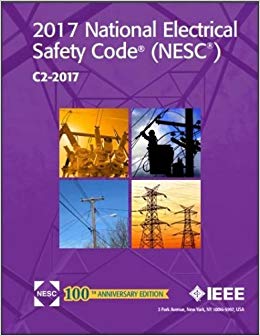
IEEE National Electrical Safety Code – 2017

IEEE National Electrical Safety Code – 2017

Book Overview
The IEEE National Electrical Safety Code – 2017 is a comprehensive standard that prescribes rules and work practices to safeguard people and utility infrastructure during the installation, operation, and maintenance of electric supply and communication systems. It addresses hazards associated with conductors, equipment in electric supply stations, and overhead and underground lines, and includes detailed “work rules” governing construction, inspection, maintenance, and operation. NESC 2017 is applicable to utility systems and analogous industrial installations under qualified control, and is structured into general sections (scope, definitions, grounding) followed by four core parts covering supply stations, overhead lines, underground lines, and work rules. The 2017 revision introduces updates to safety rules (for example, revised fence requirements, new handling of Aeolian vibration, alignment with OSHA’s changes, and adapted insulator ratings) as well as usability enhancements such as more logical organization and better tools for content access.
Key aspects:
Comprehensive Safety Coverage
- Applies to installation, operation, and maintenance of electric supply and communication lines and equipment.
- Designed to protect workers, the public, and utility infrastructure.
Applicable Systems
- Covers electric supply stations, overhead and underground lines, and communication systems.
- Also applies to industrial systems operated under the control of qualified personnel.
Regulatory and Industry Alignment
- Closely aligned with:
- OSHA 1910 Subpart R and 1926 Subpart V
- National Electrical Code (NEC) where applicable
- Best practices in utility safety and engineering standards
- Highlights:
- User-Friendly Enhancements
- Updated Work Rules
- Organized Structure
Key Features & Benefits
The IEEE National Electrical Safety Code – 2017 offers a wide-ranging framework for the safe design, installation, operation, and maintenance of electric supply and communication systems. It applies to both public utility and industrial systems that are operated by qualified personnel, covering overhead and underground electrical lines, substations, supply stations, and communication infrastructure. Structured into five major parts—including grounding, line construction, equipment protection, and work rules—the code ensures a standardized approach to electrical safety that aligns with federal regulations such as OSHA standards. This edition enhances previous rules by updating safety protocols, improving usability, and addressing modern challenges such as vibration control and insulator ratings. Its comprehensive coverage makes it essential for engineers, safety professionals, utility workers, and regulatory agencies aiming to maintain consistent, legally compliant, and high-safety standards across the power and communications industries.
Scope of Application
- Electric supply and communication lines
- Overhead and underground systems
- Power substations and supply stations
- Industrial systems operated by qualified personnel
Core Structural Organization
Introductory Rules – Scope, definitions, and grounding principles
- Part 1 – Rules for electric supply stations (e.g., substations)
- Part 2 – Rules for overhead line construction and clearances
- Part 3 – Rules for underground line construction and protection
- Part 4 – Work rules for installation, maintenance, and emergency response
Key Safety Topics Covered
- Grounding and bonding requirements
- Minimum approach distances and clearance tables
- Structural loadings and mechanical strength of equipment
- Protective equipment, fencing, and conductor support
- Aeolian vibration mitigation and insulator performance
Updated for Modern Practices
- Aligns with updated OSHA standards and NEC guidelines
- Refines work practices and inspection procedures
- Provides clearer rule references and diagrams for field use
Supports Regulatory Compliance & Training
- Used by utilities, municipalities, electrical engineers, and inspectors
- Acts as a foundation for utility safety programs and certification exams
The IEEE National Electrical Safety Code – 2017 is designed not only as a regulatory standard but also as a practical guide for those involved in utility and industrial electrical systems. It is used daily by utility engineers, safety officers, lineworkers, and inspectors to ensure that systems are installed, operated, and maintained safely and in compliance with industry norms. The code provides clear, actionable rules for tasks like working near energized lines, grounding equipment, constructing overhead and underground networks, and performing maintenance under live-line conditions. It helps crews assess hazards, determine proper clearances, select appropriate PPE, and follow safe procedures during both routine operations and emergencies. Because of its integration with OSHA regulations and its field-tested guidance, the NESC serves as a critical tool for job planning, safety training, inspections, and operational decision-making on active worksites.
Daily Field Use
- Referenced by utility crews and engineers during installation and maintenance of power and telecom lines
- Helps ensure OSHA-compliant and safe work environments
Job Site Planning & Operations
- Used to plan safe clearances, conductor spacing, and equipment layout
- Supports decisions for live-line work, grounding methods, and emergency procedures
Training & Certification
- Serves as a foundation for apprenticeship programs, technician certifications, and safety courses
- Reinforces core electrical safety practices in utility settings
Regulatory Inspections & Audits
- Used by inspectors and safety officers to ensure compliance with both NESC and OSHA
- Provides baseline criteria for safety audits and incident investigations
Applicable to Multiple Environments
- Utility power distribution and transmission systems
- Communication line systems
- Industrial plant power systems under qualified control
The IEEE National Electrical Safety Code – 2017 is widely used as a reference and study resource for licensing and certification exams in the electrical utility and communications sectors. While it is not a test-prep book in itself, it forms the core safety standard referenced by many state licensing boards, utility qualification programs, and electrical engineering certifications. Candidates preparing for exams—such as utility lineman certification, state electrical licensing, and safety compliance roles—are expected to be familiar with the structure and rules of the NESC. The code helps examinees understand critical topics like safe working distances, grounding practices, construction clearances, and inspection protocols. Its logical organization, rule-based structure, and consistent terminology support effective study, especially when paired with supplementary training materials and test guides. For professionals working in environments regulated by OSHA and NESC, familiarity with this standard is often a licensing requirement or essential job qualification.
Widely Referenced in Exams for:
- Utility lineworker certifications
- State electrical licensing exams
- Safety and compliance officer roles
- Electrical engineering PE exams (power systems focus)
Key Exam Topics Aligned with NESC:
- Minimum approach distances and clearance standards
- Grounding and bonding of electrical systems
- Overhead and underground line construction rules
- Work rules for energized systems and emergency response
Supports Exam Readiness by Covering:
- Practical safety regulations and work procedures
- Rule interpretation and technical terminology
- Alignment with OSHA 1910/1926 and NEC requirements
Best Used Alongside:
- NESC handbooks and training guides
- OSHA study materials and utility safety manuals
- Sample tests and code interpretation exercises
Recognized by Licensing & Training Bodies:
- State Public Utility Commissions (PUCs)
- Electric cooperatives and major utilities
- Industry trade schools and apprenticeship programs
The IEEE National Electrical Safety Code – 2017 is structured to support both technical precision and practical usability, featuring a clear, rule-based format with integrated visual aids and organizational tools that help users find and apply information quickly. The code is divided into logically numbered parts, each covering a specific area such as grounding, line construction, or work rules. Within these parts, rules are presented in a consistent and hierarchical format, often accompanied by tables, figures, charts, and illustrations that clarify requirements like conductor spacing, minimum clearances, and equipment configurations. The 2017 edition improved navigation by refining rule numbering and including helpful annexes, definitions, and references that assist in cross-referencing with OSHA and other standards. Whether in printed or digital format, the layout supports both in-depth code study and fast on-site lookups, making it a valuable tool for field personnel, engineers, and safety professionals.
Logical Structure & Numbering
- Divided into five main parts (introductory rules, and Parts 1–4)
- Rules are numbered consistently and grouped by topic for easy access
Helpful Visual Aids
- Tables: For minimum clearances, conductor spacing, loading conditions
- Diagrams: For grounding setups, equipment configurations, clearance zones
- Charts: Showing relationships between voltage levels and working distances
Navigation & Cross-Referencing
- Includes annexes with explanatory content
- Glossary/definitions to clarify technical terms
- References to OSHA and NEC rules for regulatory alignment
Digital Edition Features
- Searchable format with hyperlinks to specific rules
- Annotations and bookmarks for personalized navigation
- Suitable for use on laptops, tablets, or job site devices
Field-Friendly Layout
- Organized for quick lookups and decision-making in real time
- Used by crews, engineers, and inspectors for reference and verification
Book Details
- Publisher: IEEE Standards Association (IEEE-SA)
- Edition/Release Date: August 1, 2016
- ISBN: 9781504420037
- Pages: 405
- Dimensions: 8.5 x 11 inches
- Format: Paperback / Softbound
- Target Audience: Professionals
Pricing & Purchase Information
• Price: $377.99
• Shipping: Free shipping on orders over $250.
• Formats Available: Physical Book
Related Products