
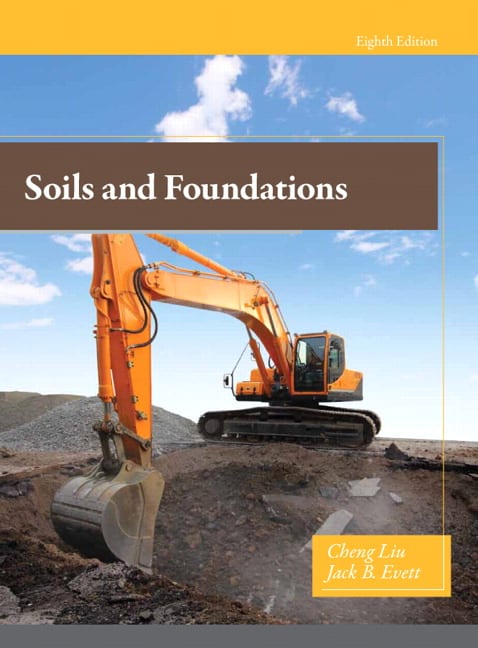
Soils and Foundations 8th ed

Soils and Foundations 8th ed

Book Overview
The Soils and Foundations 8th ed is filled with worked examples, step-by-step solutions, and hands-on practice problems, it emphasizes design and practical applications supported by basic theory. Throughout, the authors promote learning through the extensive use of diagrams, charts, and illustrations. Coverage includes: engineering properties of soils: soil exploration, compaction, stabilization, and consolidation; water in soil; subsurface stresses; settlement of structures; shear strength; shallow and deep foundations; lateral earth pressure; retaining structures, and stability analysis of slopes. This edition’s new coverage includes Pressuremeter and Dilatometer tests, water flow characterization with Bernoulli’s Theorem, dewatering, uplift pressure on dams, and subsurface stresses caused by overlying soil masses.
Key aspects:
- Target Audience: Designed for beginners in civil engineering, geotechnical engineering, and soil mechanics.
- Approach: Combines theoretical principles with practical applications, emphasizing design and real-world scenarios.
- Structure: Organized into 13 chapters, covering fundamental topics in soil mechanics and foundation engineering.
- Visual Aids: Extensive use of diagrams, charts, and illustrations to facilitate understanding.
- Problem-Solving: Includes worked examples, step-by-step solutions, and practice problems to reinforce learning.
Highlights:
- Updated Content: Introduces new coverage on Pressuremeter and Dilatometer tests, water flow characterization using Bernoulli’s Theorem, dewatering techniques, uplift pressure on dams, and subsurface stresses caused by overlying soil masses.
- Practical Applications: Emphasizes design and practical applications supported by basic theory.
- Learning Tools: Promotes learning through the extensive use of diagrams, charts, and illustrations.
- Comprehensive Coverage: Covers essential aspects of soils and foundations in a simple and direct manner.
Key Features & Benefits
The Soils and Foundations 8th ed offers a thorough exploration of soil mechanics and foundation engineering, tailored for beginners and students in civil and geotechnical engineering. The textbook delves into essential topics such as the engineering properties of soils, soil exploration, compaction, stabilization, consolidation, water in soil, subsurface stresses, shear strength, and settlement of structures. It also covers shallow and deep foundations, lateral earth pressure, retaining structures, and slope stability analysis. The 8th edition introduces new content, including Pressuremeter and Dilatometer tests, water flow characterization using Bernoulli’s Theorem, dewatering techniques, uplift pressure on dams, and subsurface stresses caused by overlying soil masses. Throughout, the authors emphasize practical applications supported by basic theory, utilizing diagrams, charts, and illustrations to facilitate learning.
- Introduction to Soil Mechanics: Foundational concepts and principles.
- Engineering Properties of Soils: Study of soil behavior and characteristics.
- Soil Exploration: Techniques for subsurface investigation.
- Soil Compaction and Stabilization: Methods to improve soil properties.
- Water in Soil: Understanding soil-water relationships.
- Subsurface Stresses in Soils: Analysis of stress distribution.
- Consolidation of Soil and Settlement of Structures: Study of soil compression and its effects.
- Shear Strength of Soil: Determining soil’s resistance to shear forces.
- Shallow Foundations: Design and analysis of foundations near the surface.
- Deep Foundations: Study of foundations extending deep into the ground.
- Lateral Earth Pressure: Understanding forces exerted by soil laterally.
- Retaining Structures: Design of structures to hold back soil.
- Stability Analysis of Slopes: Assessing the stability of soil slopes.
The Soils and Foundations 8th ed emphasizes practical application by bridging fundamental soil mechanics concepts with real-world engineering challenges. It provides clear explanations and worked examples to help students and professionals apply theoretical knowledge to design and analyze foundations, soil stabilization, and slope stability. The book incorporates practical tools such as step-by-step problem-solving methods, case studies, and illustrations that demonstrate how to address common issues encountered in construction and geotechnical projects, preparing readers to make informed decisions in the field.
- Bridges theory and real-world engineering challenges
- Includes step-by-step problem-solving methods
- Provides worked examples and case studies
- Demonstrates foundation design and soil stabilization techniques
- Covers slope stability and retaining structure analysis
- Focuses on applying soil mechanics principles in construction
- Prepares students and professionals for practical decision-making
The Soils and Foundations 8th ed serves as a valuable resource for those preparing for civil engineering licensing exams, particularly in geotechnical and foundation engineering topics. The clear presentation of fundamental principles, along with numerous worked examples and practice problems, helps candidates build a strong conceptual understanding. The inclusion of updated testing methods and practical applications aligns well with current exam content, enabling students and professionals to confidently tackle exam questions related to soil mechanics, foundation design, and related engineering principles.
- Covers essential soil mechanics and foundation engineering topics tested in licensing exams
- Clear explanations build strong conceptual understanding
- Includes numerous worked examples and practice problems
- Aligns with current exam standards and content
- Addresses updated testing methods and practical engineering applications
- Helps build confidence for exam success in civil and geotechnical engineering
The Soils and Foundations 8th ed uses a clear and logical structure to guide readers through complex topics in soil mechanics and foundation engineering. Each chapter is organized to build foundational knowledge before progressing to more advanced concepts. The book is richly illustrated with detailed diagrams, charts, and tables that clarify difficult principles and processes. Step-by-step worked examples are integrated throughout to reinforce learning, and summaries at the end of chapters help consolidate key points. This combination of visual aids and well-organized content enhances comprehension and supports effective study.
- Clear, logical chapter organization progressing from fundamentals to advanced topics
- Detailed diagrams, charts, and tables to explain complex concepts
- Step-by-step worked examples embedded within chapters
- Chapter summaries to reinforce key points
- Use of visual aids to support varied learning styles
- Helps readers build knowledge progressively and efficiently
Book Details
- Publisher: Pearson
- Edition/Release Date: 8th Edition, July 25th, 2013
- ISBN: 9780135113905
- Pages: 277
- Dimensions: 10.9 × 8.5 × 0.6 inches
- Format: Hardcover
- Target Audience: Professionals
Pricing & Purchase Information
• Price: $143.99
• Shipping: Free shipping on orders over $250.
• Formats Available: Physical Book
Related Products