
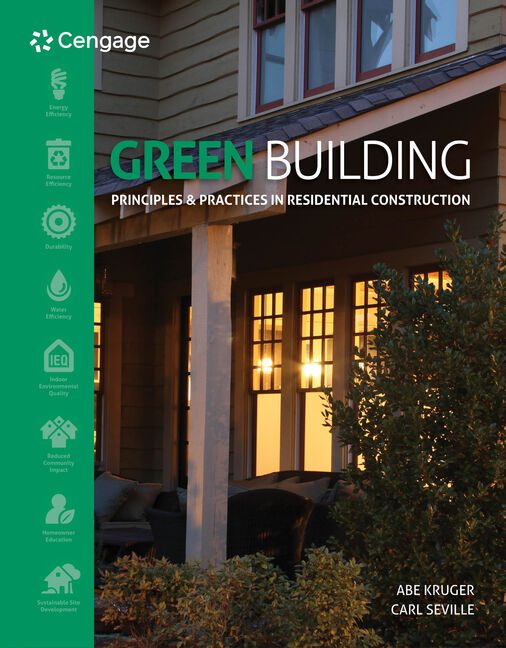
Green Building: Principles and Practices in Residential Construction

Green Building: Principles and Practices in Residential Construction

Price: $155.99
The Green Building: Principles and Practices in Residential Construction provides a current, comprehensive guide to this exciting, emerging field. From core concepts to innovative applications of cutting-edge technology and the latest industry trends, this text offers an in-depth introduction to the construction of ""green"" homes. Unlike many texts that adopt...

Shopping with us is fast, easy, and affordable

Free Shipping Available on $250+ Orders
Buy Confidently with our Hassle-Free Returns
Sales Suport Available 1-800-952-0910
Book Overview

The Green Building: Principles and Practices in Residential Construction presents a comprehensive, process‑oriented guide to designing and constructing sustainable homes. The authors begin by framing the home as an integrated system—emphasizing how building envelopes, mechanical systems, site placement and occupant behavior all interact—to encourage builders, designers, and students to adopt a holistic perspective rather than treating “green features” as discrete add‑ons. From there the book moves through the full lifecycle of a residential project: selecting and orienting the site, planning the construction sequence with sustainability in mind, optimizing the envelope with insulation and air‑sealing, choosing efficient windows and doors, installing smart mechanical, plumbing and electrical systems, using materials with low environmental and health impacts, integrating renewable energy where appropriate, and finally considering long‐term operation, maintenance, and adaptation of the home.

Key aspects:

Holistic Home as a System

  • Treats the house as an integrated system where building envelope, mechanical systems, site orientation, and occupant behavior interact.
  • Emphasizes that green building decisions affect the whole home, not just individual components.

Lifecycle Approach

  • Covers the entire residential construction process from site selection, planning, design, construction, to operation and maintenance.
  • Encourages thinking beyond the build to long-term sustainability and adaptability.

Process-Oriented Green Practices

  • Focuses on how to implement green building rather than only listing eco-friendly products.
  • Addresses sequencing, coordination among trades, quality control, and performance verification.

Residential Focus

  • Primarily targets single-family homes, remodels, and small residential projects.
  • Practical guidance tailored to the scale of residential construction.

Integration of Building Systems

  • Energy efficiency: insulation, air sealing, high-performance windows, passive design, and right-sized HVAC.
  • Water efficiency: low-flow fixtures, rainwater harvesting, landscaping.
  • Materials: low-VOC, recycled content, durable and sustainable options.
  • Renewable energy: solar, geothermal, and other technologies integrated appropriately.

Educational Utility

  • Suitable for students in construction, architecture, and sustainability programs.
  • Useful for builders, remodelers, architects, engineers, and inspectors as a reference guide.

Highlights:

Case Studies and Builder Profiles

  • Real-world examples of sustainable homes and interviews with professionals.
  • Bridges theory with practical execution.

Emphasis on Indoor Environmental Quality (IEQ)

  • Ventilation, daylighting, thermal comfort, acoustics, and health-focused material selection.

Illustrative and Visual Learning

  • Photographs, diagrams, and icons that make green building concepts easier to understand.

Sustainability Beyond Materials

  • Focus on occupant education, home performance, and long-term environmental responsibility.

Comprehensive Coverage

  • Includes foundations, walls, roofs, windows, doors, mechanical systems, electrical, plumbing, finishes, landscaping, and renewable energy systems.

Bridges Theory and Practice

  • Encourages a mindset where green building is a process, not just a checklist.
  • Aligns comfort, durability, performance, and environmental responsibility.

Key Features & Benefits

Product Checkbox
Comprehensive Coverage:

The Green Building: Principles and Practices in Residential Construction provides comprehensive coverage of all aspects of residential construction through a green building lens, guiding readers from initial planning to long-term home operation. It begins with site selection and orientation, emphasizing how proper placement and design can optimize energy efficiency and environmental performance. The text then addresses the building envelope, covering foundations, walls, roofs, insulation, air sealing, and windows and doors to ensure thermal efficiency and durability. Mechanical, electrical, and plumbing systems are explored with a focus on efficiency, integration, and performance verification. Interior finishes, materials, and low-impact products are discussed to support healthy indoor environments, while landscaping, outdoor spaces, and water management demonstrate sustainable site design. Finally, renewable energy integration, home operation, maintenance, and adaptability are considered, ensuring that green principles extend throughout the home’s lifecycle. Throughout, the book balances technical detail with practical guidance, case studies, and visual examples to make green construction actionable for both students and professionals.

Site Planning and Orientation:

  • Site selection, minimizing environmental impact, optimizing solar gain and natural ventilation.

Foundations and Building Envelope:

  • Foundations, floors, walls, roofs, insulation, air sealing, thermal bridging prevention.

Fenestration (Windows and Doors):

  • High-performance glazing, proper installation, daylighting, and energy efficiency.

Mechanical, Electrical, and Plumbing Systems:

  • Right-sized HVAC, energy-efficient lighting, water-efficient plumbing, integration with building envelope.

Materials and Interior Finishes:

  • Low-VOC, recycled content, sustainable materials, durability, indoor air quality considerations.

Landscaping and Outdoor Spaces:

  • Drought-tolerant landscaping, water management, sustainable outdoor living areas.

Renewable Energy Integration:

  • Solar photovoltaics, solar water heating, geothermal and other renewable technologies.

Operations, Maintenance, and Lifecycle Thinking:

  • Home performance monitoring, occupant education, durability, adaptability, and long-term sustainability.

Practical Guidance:

  • Case studies, builder profiles, visual examples, and step-by-step green building practices.
Product Checkbox
Practical Application:

The Green Building: Principles and Practices in Residential Construction lies in its step-by-step guidance for integrating sustainable principles into real-world residential projects. The book equips builders, contractors, architects, and students with actionable strategies to implement green building practices at every stage of a home’s lifecycle. It goes beyond theory, showing how to sequence construction tasks, coordinate among trades, select environmentally preferable materials, optimize energy and water efficiency, and incorporate renewable energy systems. Case studies and builder profiles illustrate how these principles are applied in actual projects, while diagrams, photographs, and checklists provide concrete guidance. By emphasizing process, quality control, and performance verification, the text enables professionals to design and build homes that are energy-efficient, durable, healthy, and adaptable, ensuring that green building goals are not only conceptual but achievable in practice.

Step-by-Step Construction Guidance:

  • Detailed sequencing of tasks from site planning to final finishes to integrate green principles efficiently.

Trade Coordination:

  • Instructions on how architects, contractors, and builders can collaborate for optimal energy and resource performance.

Material Selection:

  • Guidance on choosing low-VOC, recycled, or locally sourced materials to reduce environmental impact.

Energy and Water Efficiency:

  • Practical techniques for insulation, air sealing, high-performance windows, efficient HVAC, and water-saving fixtures.

Renewable Energy Integration:

  • Real-world strategies for incorporating solar panels, solar water heating, or geothermal systems.

Case Studies and Builder Profiles:

  • Examples of successful green residential projects highlighting lessons learned and best practices.

Performance Verification and Quality Control:

  • Methods to test and confirm energy efficiency, air quality, and overall sustainability of the home.

Occupant Education and Maintenance:

  • Guidance on educating homeowners for proper use, maintenance, and long-term sustainability of their green homes.
Product Checkbox
Licensing Exam Preparation:

The Green Building: Principles and Practices in Residential Construction serves as a valuable resource for individuals preparing for licensing or certification exams in residential construction, green building, or related sustainability credentials. The book covers the full spectrum of knowledge typically tested in such exams, including site planning, energy-efficient building envelopes, HVAC and plumbing systems, materials selection, renewable energy integration, and sustainable site design. Its emphasis on the home as a system helps candidates understand how different components interact, which is a key focus in many professional licensing exams. Case studies, diagrams, and practical examples reinforce theoretical concepts, making it easier to recall processes, code requirements, and best practices under exam conditions. By studying this text, candidates gain both conceptual understanding and applied knowledge that can be directly translated into licensing exam questions.

Comprehensive Knowledge Coverage:

  • Site planning, foundations, walls, roofs, windows, doors, HVAC, plumbing, electrical, finishes, landscaping, and renewable energy systems.

System-Based Thinking:

  • Understand how components interact (envelope, mechanical systems, water, energy), which is often emphasized in licensing exams.

Code and Standards Awareness:

  • Discusses energy codes, building codes, and sustainability standards relevant to residential construction.

Case Studies and Examples:

  • Real-world projects reinforce practical understanding of green building principles.

Visual Learning:

  • Diagrams, charts, and illustrations support memorization and conceptual clarity.

Exam-Focused Application:

  • Encourages process-oriented thinking, problem-solving, and troubleshooting skills frequently tested on licensing exams.

Preparation for Certifications:

  • Useful for general contractor licenses, green building certifications (like LEED, NAHB Green), and other residential construction credentials.
Product Checkbox
Visual & Organizational Tools:

The Green Building: Principles and Practices in Residential Construction employs a variety of visual and organizational tools to enhance comprehension and facilitate practical application. Throughout the book, diagrams, illustrations, photographs, tables, and charts are used to clarify complex concepts, such as building envelope interactions, energy flow, HVAC system integration, and water management strategies. Icons and color-coded symbols highlight key green building practices, making them easy to identify at a glance. The book’s content is organized logically, following the typical residential construction sequence—from site planning and foundations through finishes, systems, landscaping, and renewable energy—allowing readers to follow a clear, step-by-step progression. Each chapter also includes summaries, key points, and practical tips, which reinforce learning and help organize information for both study and field reference. Together, these tools make the book highly accessible for students, builders, and professionals seeking to apply green building principles in a structured and visual manner.

Diagrams and Illustrations:

  • Show energy flow, air sealing, insulation details, HVAC integration, and water management concepts.

Photographs:

  • Real-world examples of green construction practices, materials, and finished homes.

Tables and Charts:

  • Summarize material properties, energy performance metrics, cost-benefit comparisons, and construction guidelines.

Icons and Symbols:

  • Highlight green building strategies, sustainable materials, and critical considerations throughout chapters.

Chapter Organization:

  • Follows a logical residential construction sequence from planning → envelope → systems → finishes → landscaping → renewable energy.

Summaries and Key Points:

  • Each chapter includes concise takeaways, practical tips, and review points for quick reference.

Practical Tips & Checklists:

  • Help translate theory into actionable steps on job sites or during study sessions.

Visual Learning Enhancement:

  • Combines text with graphics to make complex concepts easier to understand and retain.
Publisher Information

Abe Kruger is a certified Building Performance Institute (BPI) building analyst and Home Energy Rating System (HERS) trainer and rater, as well as an active member of the Residential Energy Services Network (RESNET) National Technical Committee. He has conducted energy-efficiency and conservation training for builders, renovators, home inspectors, contractors, and homeowners around the country. Mr. Kruger provides green building training and presentations at regional and national conferences, including RESNET, Affordable Comfort, Inc. (ACI), Green Prints, and Green Build, and he is accredited to perform EarthCraft House, Leadership in Energy and Environmental Design (LEED) for Homes, and ENERGY STAR certifications. Mr. Kruger also assists with designing, implementing, and evaluating utility-run energy-efficiency programs. In 2009, Mr. Kruger founded Kruger Sustainability Group (KSG) to provide green building training, consulting, and curriculum development for colleges, companies, and nonprofit organizations.

Carl Seville has honed his expertise in sustainable construction through over 30 years as a remodeling contractor, educator, and consultant in the residential construction industry. His groundbreaking work has been recognized with numerous awards, including the Excellence Award for Green Homes from Residential Design Build Magazine (2008), the Energy Value Housing Award (2009), two Green Remodeling Advocate of the Year Awards (2005, 2007), two National Green Building Awards (2004, 2006), the Southface Energy Institute Award of Excellence for Environmental Stewardship (2003), and the EarthCraft House Leadership award (2006). Mr. Seville is a Building Performance Institute (BPI) building analyst, a National Association of Home Builders (NAHB) certified trainer, and a Home Energy Rating System (HERS) rater, and he holds the Leadership in Energy and Environmental Design (LEED) AP Homes and Green Rater designations.

Other Works

Book Details
  • Publisher: Cengage Learning
  • Edition/Release Date: 1st Edition, January 3rd, 2012
  • ISBN: 9781285225920
  • Pages: 608
  • Dimensions: 8.75 × 11.25 inches
  • Format: Paperback / Softbound
  • Target Audience: Professionals
Pricing & Purchase Information

• Price: $155.99
• Shipping: Free shipping on orders over $250.
• Formats Available: Physical Book

Related Products

Ensure you and your team are up-to-date with the latest Green Building: Principles and Practices in Residential Construction and stay compliant with ease.

Click below to order your copy of Green Building: Principles and Practices in Residential Construction today!